Cancer: A disease at the crossroads of trade-offs

Beata U.

Authors: Jacqueline, Camille; Biro, Peter A.; Beckmann, Christa; Moller, Anders Pape; Renaud, Francois; Sorci, Gabriele; Tasiemski, Aurelie; Ujvari, Beata; Thomas, Frederic

Source: EVOLUTIONARY APPLICATIONS, 10 (3):215-225, MAR 2017

Brief summary of the paper: Central to evolutionary theory is the idea that living organisms face phenotypic and/or genetic trade‐offs when allocating resources to competing life‐history demands, such as growth, survival, and reproduction. These trade‐offs are increasingly considered to be crucial to further our understanding of cancer.

First, evidences suggest that neoplastic cells, as any living entities subject to natural selection, are governed by trade‐offs such as between survival and proliferation. Second, selection might also have shaped trade‐offs at the organismal level, especially regarding protective mechanisms against cancer. Cancer can also emerge as a consequence of additional trade‐offs in organisms (e.g., eco‐immunological trade‐offs).

Here, we review the wide range of trade‐offs that occur at different scales and their relevance for understanding cancer dynamics. We also discuss how acknowledging these phenomena, in light of human evolutionary history, may suggest new guidelines for preventive and therapeutic strategies.

Ecology and Evolution of Cancer – book launch

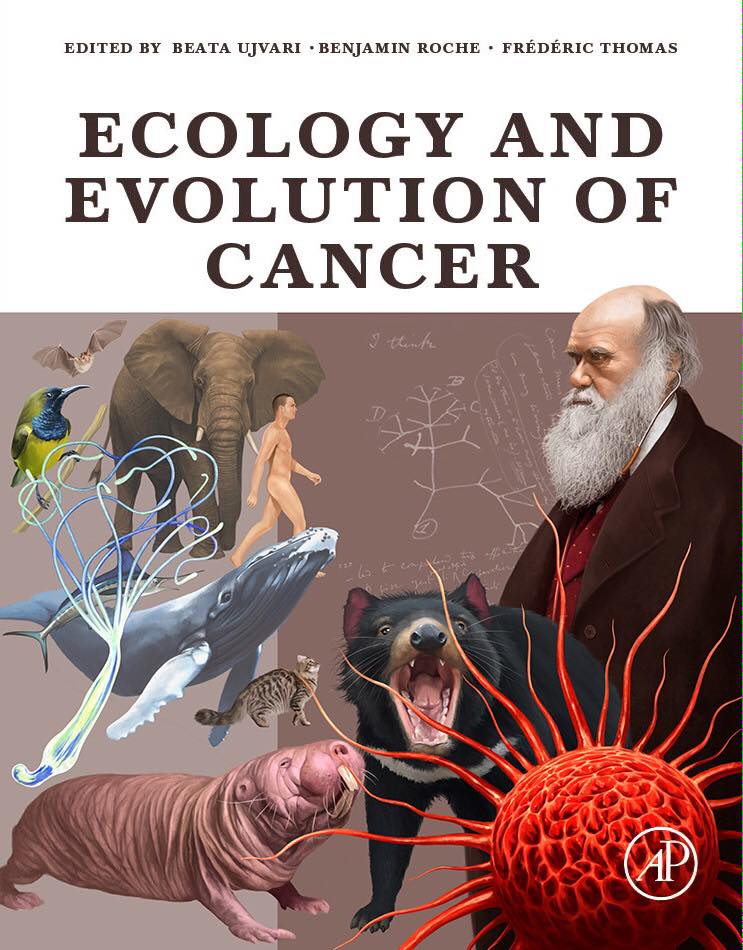
Ecology and Evolution of CancerA world-first book combining evolutionary ecology with oncology was launched last Friday by French scientific and technology attaché Anne Rouault.

The book Ecology and Evolution of Cancer (edited by Beata Ujvari, Benjamin Roche and Frederic Thomas; cover by artist Eric Pelatan) outlining an exceptional new approach of this terrible disease as an evolutionary and ecological process.

According to Dr Ujvari the book was the first to look at using an evolutionary ecology approach with the aim of improving cancer prevention and therapies.

The book provides both an introduction to cancer evolution and a review of the current research on this burgeoning, exciting field, presented by an international group of leading editors and contributors. This project is a collaboration between the French research institute, the National Centre for Scientific Research (CNRS), and Deakin University.

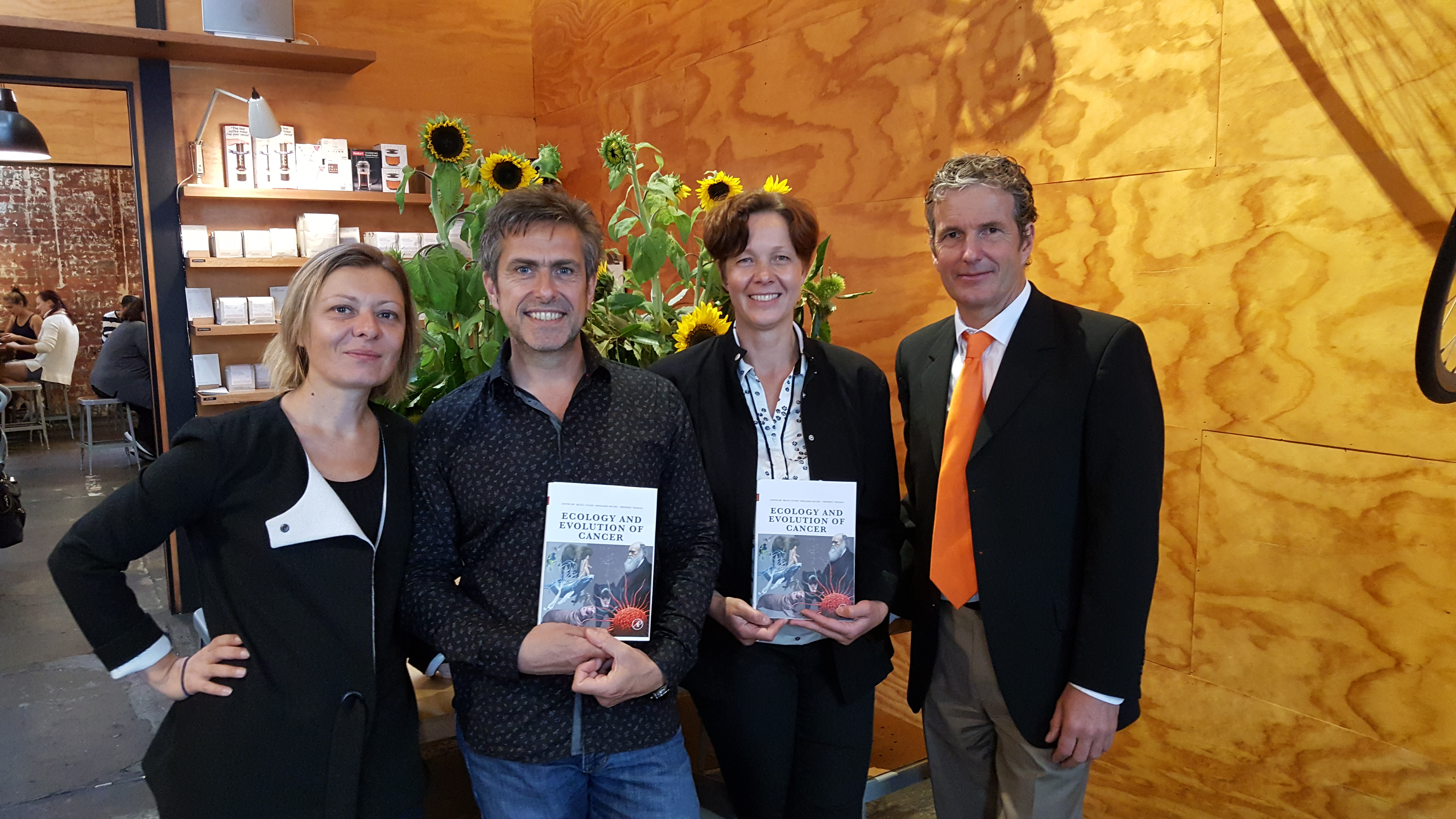
French scientific and technology attaché, Anne Rouault from the French embassy; Frederic Thomas from the French National Centre for Scientific Research; Beata Ujvari and Marcel Klaassen from the Centre for Integrative Ecology

Want to hear more? Listen to Beata’s interview about the book by Red Symons from ABC Radio Melbourne – Breakfast (scroll to 45min,10s).


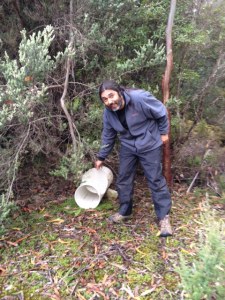
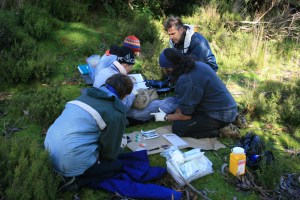
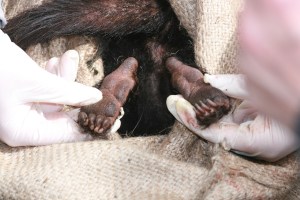
Frederic Thomas from CNRS/France visit to the fieldwork in Tasmania

Have you have ever wondered how working with devils looks like? Here’s a glimpse to what we do (In collaboration with Dr Rodrigo Hamede, UTAS. Field site – Cradle Mountain):

— Click on any image to enlarge — 

Cancer brings forward oviposition in the fly Drosophila melanogaster

Beata U.

Beata U.

Authors: Audrey Arnal, Camille Jacqueline, Beata Ujvari, Lucas Léger, Céline Moreno, Dominique Faugere, Aurélie Tasiemski, Céline Boidin-Wichlacz, Dorothée Missé, Francois Renaud, Jacques Montagne, Andreu Casali, Benjamin Roche, Frédéric Mery, Frederic Thomas

SourceEcology and Evolution, 7(1), November 2016

Brief summary of the paper: Hosts often accelerate their reproductive effort in response to a parasitic infection, especially when their chances of future reproduction decrease with time from the onset of the infection.

Because malignancies usually reduce survival, and hence potentially the fitness, it is expected that hosts with early cancer could have evolved to adjust their life‐history traits to maximize their immediate reproductive effort. Despite the potential importance of these plastic responses, little attention has been devoted to explore how cancers influence animal reproduction.

Here, we use an experimental setup, a colony of genetically modified flies Drosophila melanogaster which develop colorectal cancer in the anterior gut, to show the role of cancer in altering life‐history traits. Specifically, we tested whether females adapt their reproductive strategy in response to harboring cancer.

We found that flies with cancer reached the peak period of oviposition significantly earlier (i.e., 2 days) than healthy ones, while no difference in the length and extent of the fecundity peak was observed between the two groups of flies. Such compensatory responses to overcome the fitness‐limiting effect of cancer could explain the persistence of inherited cancer‐causing mutant alleles in the wild.

Seminar by Dr Rodrigo Hamede – Learning to live with cancer: ecology, epidemiology and evolution in Tasmanian devil facial tumour disease

rodrigo-hamedeSPEAKER: Dr Rodrigo Hamede, Postdoctoral Research Fellow, School of Biological Sciences, University of Tasmania, Hobart

DATE: Friday, 9th December 2016
LOCATION: Geelong Campus at Waurn Ponds – room ka4.207
TIME: 1:30pm
Seminar will also be video linked to the following campuses: Melbourne Campus at Burwood, LT5 (B3.07); and Warrnambool Campus, Room J2.22

External visitors – wish to join us and connect to our seminars?

  • You may connect to the live seminar via *N SEBE VMP LES Seminars 52236958@deakin.edu.au [ID.36958] or via the methods listed HERE.
  • For Deakin staff and students, please join via Skype for Business (Lync).
  • Could not log in? More info on how to connect is available HERE.
  • Please note that connection is only available while a seminar is taking place.

As a courtesy, we request that when connecting to the seminar that you mute your microphone unless you are required to speak, this would ensure that the sound from the speaker to the audience is not disrupted by feedback from your microphone – thank you!

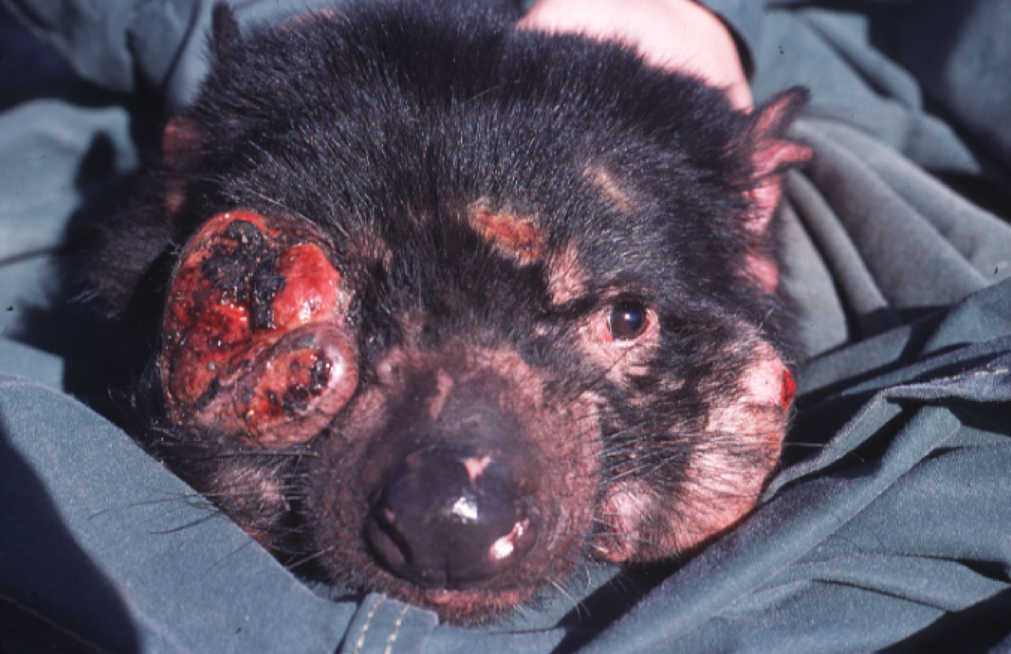
ABSTRACT: Transmissible cancers in wildlife have been recently considered a new threat to conservation and biodiversity. Tasmanian devil facial tumour disease (DFTD) is a rare clonally transmissible cancer affecting the largest extant marsupial carnivore, the Tasmanian devil (Sarcophilus harrisii).

The epidemic has caused dramatic population declines and has been regarded as a serious concern for the survival of this species. Since it was first detected in 1996, DFTD has undergone evolutionary changes, producing several karyotype variants, all capable of transmission between devils.

This presentation will discuss the mechanisms that allow cancer cells to be transmitted between individuals as well as the epidemiology, ecology and evolution of DFTD and the extent to which different tumour lineages could change the development of the epidemic and its population effects.

Understanding the evolutionary dynamics of wildlife diseases and assessing how they influence transmission and epidemic outcome in host population is vital for managing infectious diseases. The Tasmanian devil/DFTD system provides a broad and interdisciplinary framework to understand the role of cancers in wildlife health and the complex mechanisms that could be involved in their appearance and persistence in wild populations.

BIO:

PROFESSIONAL

  • University of Tasmania  Biology and Epidemiology – Postdoctoral Fellow 2012-2016
  • University of Tasmania Biology and Epidemiology – PhD 2012
  • University of Tasmania  Biology and Environmental Sciences – BSc (Hons) 2004

APPOINTMENTS/AWARDS

  • Discovery Early Career Researcher Award (DECRA Recipient 2017)
  • Australian Research Council    Postdoctoral Research Fellow – National Science Foundation, UTas – Washington State University  2014-2016
  • Postdoctoral Research Fellow, Australian Research Council, UTas – Griffith University 2012-2013

PUBLICATIONS

Around 20 publications in multidisciplinary journals including: Nature Communications, PNAS, Ecology Letters, Conservation Biology, Journal of Applied Ecology, Evolutionary Applications, Veterinary Pathology.

Appointments with guest speaker may be made via Beata Ujvari.
Transmissible cancers in an evolutionary context

Beata U.

Beata U.

Authors: Ujvari, Beata; Papenfuss, Anthony T.; Belov, Katherine

Source: BIOESSAYS, 38 S14-S23; 1, JUL 2016

Brief summary of the paper: Cancer is an evolutionary and ecological process in which complex interactions between tumour cells and their environment share many similarities with organismal evolution.

Tumour cells with highest adaptive potential have a selective advantage over less fit cells. Naturally occurring transmissible cancers provide an ideal model system for investigating the evolutionary arms race between cancer cells and their surrounding micro-environment and macro-environment. However, the evolutionary landscapes in which contagious cancers reside have not been subjected to comprehensive investigation.

Here, we provide a multifocal analysis of transmissible tumour progression and discuss the selection forces that shape it. We demonstrate that transmissible cancers adapt to both their micro-environment and macro-environment, and evolutionary theories applied to organisms are also relevant to these unique diseases.

The three naturally occurring transmissible cancers, canine transmissible venereal tumour (CTVT) and Tasmanian devil facial tumour disease (DFTD) and the recently discovered clam leukaemia, exhibit different evolutionary phases: (i) CTVT, the oldest naturally occurring cell line is remarkably stable; (ii) DFTD exhibits the signs of stepwise cancer evolution; and (iii) clam leukaemia shows genetic instability.

While all three contagious cancers carry the signature of ongoing and fairly recent adaptations to selective forces, CTVT appears to have reached an evolutionary stalemate with its host, while DFTD and the clam leukaemia appear to be still at a more dynamic phase of their evolution.

Parallel investigation of contagious cancer genomes and transcriptomes and of their micro-environment and macro-environment could shed light on the selective forces shaping tumour development at different time points: during the progressive phase and at the endpoint. A greater understanding of transmissible cancers from an evolutionary ecology perspective will provide novel avenues for the prevention and treatment of both contagious and non-communicable cancers.

Curvilinear telomere length dynamics in a squamate reptile

beata-u-jordan-c-thomas-m

Beata U., Jordan C. and Thomas M.

Authors: Beata Ujvari, Peter A. Biro, Jordan E. Charters, Gregory Brown, Kim Heasman, Christa Beckmann, Thomas Madsen

Source: Functional Ecology (published online 14 September 2016)

Brief summary of the paper: The lack of consensus concerning the impact of telomere length (TL) dynamics on survival emphasize the need for additional studies to evaluate the effect of TL on key life history processes

Using both cross-sectional and longitudinal data, we therefore explored age-specific TL dynamics in a squamate reptile; the frillneck lizard (Chlamydosaurus kingii).

Our cross sectional analyses revealed that young lizards had short TL, TL increased in medium aged lizards but TL decreased in older age cohorts, revealing a curvilinear relationship between TL and frillneck lizard age.

Neither our cross-sectional nor our longitudinal analyses revealed any association between TL dynamics and lizard survival.

We observed a significant positive relationship between TL and telomerase expression (TE), suggesting that TE is a significant determinant of frillneck lizard TL dynamics.

Importantly, our longitudinal analyses revealed a positive relationship between initial TL and telomere attrition rate within individual lizards i.e. lizards with short initial telomeres were subjected to reduced telomere attrition rates compared to lizards with long initial TL.

Our results strongly suggest that TL and TE dynamics in frillneck lizards is not associated with lizard survival but rather reflect an adaptation to maintain TL above a critical minimum length in order to sustain cellular homeostasis.

Seminar by Dr Denis O’Meally – Sequencing the koala genome with long reads

denis_omeallySPEAKER: Dr Denis O’Meally, Centre for Animal Health Innovation, University of Sunshine Coast

DATE: Friday, 16th September 2016
LOCATION: Geelong Campus at Waurn Ponds, Room KA4.207
TIME: 1:30pm
Seminar will also be video linked to the following campuses: Melbourne Campus at Burwood, Burwood Corporate Centre (BCC) and Warrnambool Campus, Room J2.22

External visitors – wish to join us and connect to our seminars?

  • You may connect to the live seminar via *N SEBE VMP LES Seminars 52236958@deakin.edu.au [ID.36958] or via the methods listed HERE.
  • For Deakin staff and students, please join via Skype for Business (Lync).
  • Could not log in? More info on how to connect is available HERE.
  • Please note that connection is only available while a seminar is taking place.

As a courtesy, we request that when connecting to the seminar that you mute your microphone unless you are required to speak, this would ensure that the sound from the speaker to the audience is not disrupted by feedback from your microphone – thank you!

ABSTRACT: The koala, Phascolarctos cinereus, is a biologically unique and evolutionarily distinct arboreal marsupial that is frequently regarded as an ‘iconic symbol of conservation’ due to a range of threatening processes including disease and habitat loss. The Koala Genome Consortium, a multi-disciplinary international collaboration, is using modern genomic and transcriptomic tools to investigate the koala’s unique biology and its particular conservation challenges.

Three geographically separate koalas (two female and one male) were genome sequenced to a depth of 30-100X using a range of platforms (including Illumina and PacBio) and RNAseq for multiple tissues tissues. This presentation will report the koala de novo genome assembly and annotation, including the unusual genomic attributes we have discovered for this iconic, monotypic marsupial.

BIO: Dr Denis O’Meally is a Research Fellow at the University of the Sunshine Coast and a member of the Koala Genome Consortium. His research focuses on the evolution of amniote genomes, using the variation in Australia’s unique fauna to understand how genomes interact with their environment. Denis has broad interests in genome evolution including sex determination and sex chromosomes, immunogenetics and molecular convergence.

Dr O’Meally completed his PhD on reptile sex determination at the Australian National University in 2010 and has held postdoctoral positions at The University of Sydney and University of Canberra. Prior to undertaking a PhD, he was the collection manager for the Evolutionary Biology Unit at the Australian Museum, Sydney.

Appointments with guest speaker may be made via Beata Ujvari.
Transmissible cancers, are they more common than thought?

tas_devilAuthors: Ujvari, Beata; Gatenby, Robert A.; Thomas, Frederic

Source: EVOLUTIONARY APPLICATIONS, 9 (5):633-634, JUN 2016

Brief summary of the paper: Although many cancers are associated with infectious agents, only four naturally occurring transmissible cancers have so far been identified in dogs, soft‐shell clams and Tasmanian devils (DFT1 and DFT2). The recent discovery of DFT2 provides an intriguing story to the evolution of transmissible cancers and poses several questions:

  1. How could two transmissible cancers emerge in the same species?
  2. How will the two DFT variants evolve?
  3. Are transmissible cancers rare?

Seminar by A/Professor Robbie Wilson – Measuring success in nature and sport: how animals perform and why it matters

Robbie WilsonSPEAKER: Associate Professor Robbie Wilson, School of Biological Sciences, The University of Queensland

DATE: Friday, 26th August 2016
LOCATION: Geelong Campus at Waurn Ponds, Room KA4.207
TIME: 1:30pm
Seminar will also be video linked to the following campuses: Melbourne Campus at Burwood, Burwood Corporate Centre (BCC) and Warrnambool Campus, Room J2.22

External visitors – wish to join us and connect to our seminars?

  • You may connect to the live seminar via *N SEBE VMP LES Seminars 52236958@deakin.edu.au [ID.36958] or via the methods listed HERE.
  • For Deakin staff and students, please join via Skype for Business (Lync).
  • Could not log in? More info on how to connect is available HERE.
  • Please note that connection is only available while a seminar is taking place.

As a courtesy, we request that when connecting to the seminar that you mute your microphone unless you are required to speak, this would ensure that the sound from the speaker to the audience is not disrupted by feedback from your microphone – thank you!

ABSTRACT: I’m interested in understanding what drives success in physical activities, and I study performance in very different but complementary systems: wild marsupials and professional athletes. The study of humans and wildlife have operated in relative isolation; by bringing these disparate fields together I aim to change the way we study performance — ultimately providing new insights into conservation, evolution and sport development.

In this seminar, I will present data on wild northern quolls, semi- and professional soccer players, and professional tennis players to demonstrate the three factors I believe are fundamental to this new performance paradigm: (1) studying suites of traits, (2) measuring athleticism and skill, and (3) focusing on performance outcomes.

BIO: Robbie Wilson is an Associate Professor and ARC Future Fellow in the School of Biological Sciences at the University of Queensland, where he has been a faculty member since 2006.

Robbie completed his PhD in thermal biology at UQ in 2000 and his undergraduate studies at the University of Sydney in 1993. After completing postdoctoral positions at the University of Antwerp in Belgium and the University of St Andrews in Scotland, Robbie returned to UQ to take up an ARC early career fellowship in 2003.

His research interests are in the ecology of physical performance, with a focus on understanding what drives task success in wild animals and human athletes.

Appointments with guest speaker may be made via Beata Ujvari.