Authors: Beichen Yang, Matthew K. Jago, Thomas S. Mock, Barney M. Hines, Michael J. Salini, Giovanni M. Turchini, Richard P. Smullen, Nynke Raven, David S. Francis
Source: Aquaculture (Dec 2025)
Abstract
Dietary choline plays a functional role in lipid metabolism of Atlantic salmon. Fillet and visceral adipose tissue have been considered as the primary sites for lipid and energy storage. Currently, the effects of dietary choline inclusion on lipid metabolism, particularly triacylglycerol storage and metabolism in visceral adipose tissue of Atlantic salmon, remain poorly understood. To test this, four diets were formulated and manufactured with graded levels of choline (2.5, 3.3, 4.4, and 5.2 mg/g diet) and fed to juvenile Atlantic salmon for 124 days.
This study showed that the impact of dietary choline concentration on lipid deposition was primarily reflected in the visceral adipose tissue instead of the fillet. In visceral adipose tissue, both triacylglycerol and phosphatidylcholine concentration responded quadratically as dietary choline concentration increased (P < 0.05), however, these two lipid classes were negatively correlated (P < 0.05). Regression revealed that both the highest (5.2 mg/g) and lowest levels of dietary choline (2.5 mg/g) accumulated higher triacylglycerol associated with adipocyte hypertrophy in visceral adipose tissue relative to moderate inclusion levels.
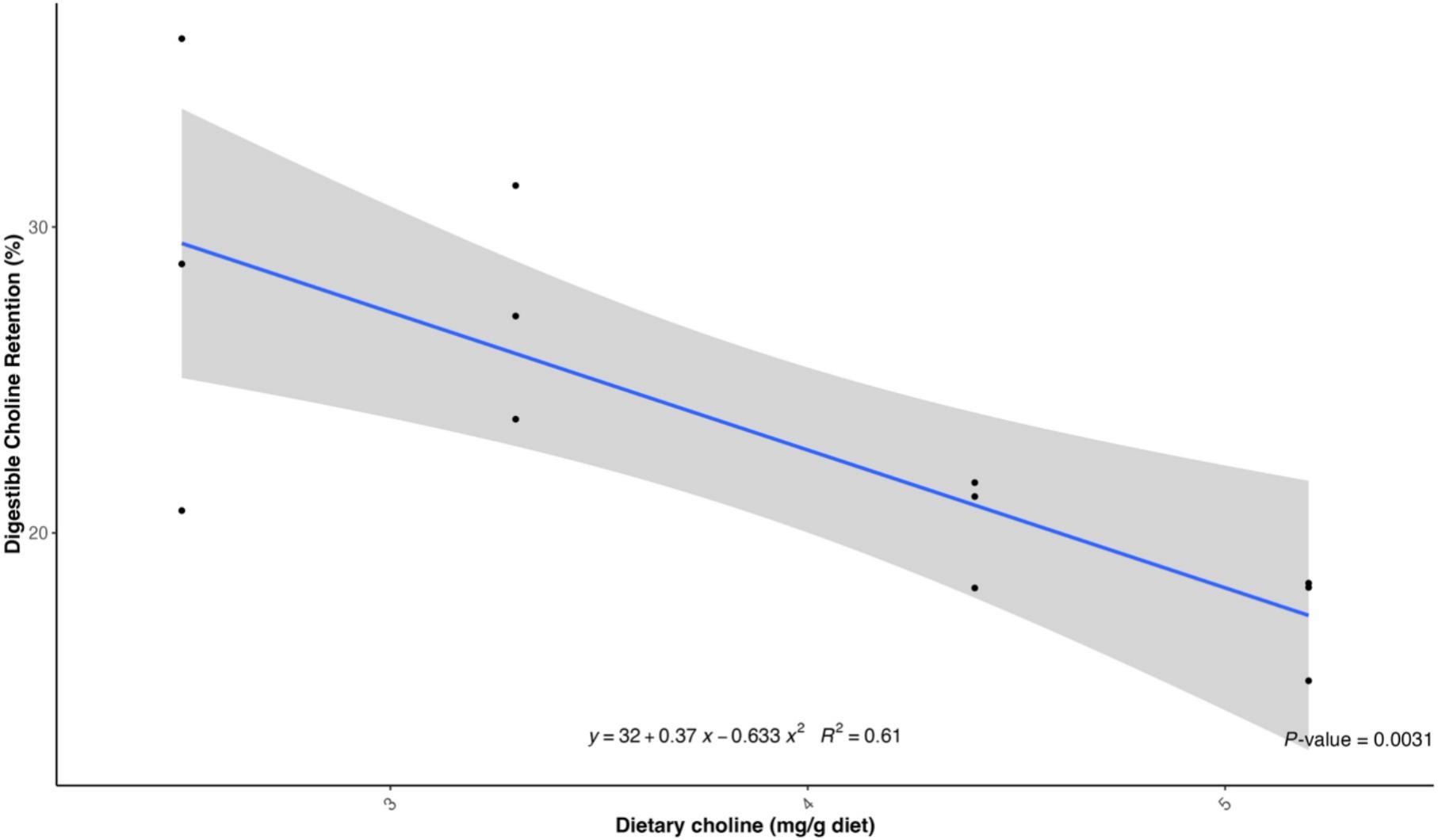
The highest level of dietary choline tested (5.2 mg/g) demonstrated enhanced diacylglycerol acyltransferase-dependent triacylglycerol synthesis, however, this was accompanied by the lowest protein, energy and dry matter digestibility. The inclusion level of 2.5 mg/g dietary choline was considered deficient for Atlantic salmon, given the prevalence of visceral adiposity and growth retardation, accompanied by the lowest apparent choline digestibility.
This study highlights the impact of dietary choline levels on triacylglycerol storage and metabolism in the visceral adipose tissue of Atlantic salmon.
Discover more from The Wild Genes Group
Subscribe to get the latest posts sent to your email.

