Beautiful summary of our work by @GrrrlScientist. Check it out at:
and share it if you like it!
Beautiful summary of our work by @GrrrlScientist. Check it out at:
and share it if you like it!
Tasmanian devils have highly complex and ancient immunoglobulin light chain variable repertoires. Our article with Kathy Belov just gone online. Check out:
http://www.sciencedirect.com/science/article/pii/S0165242715001750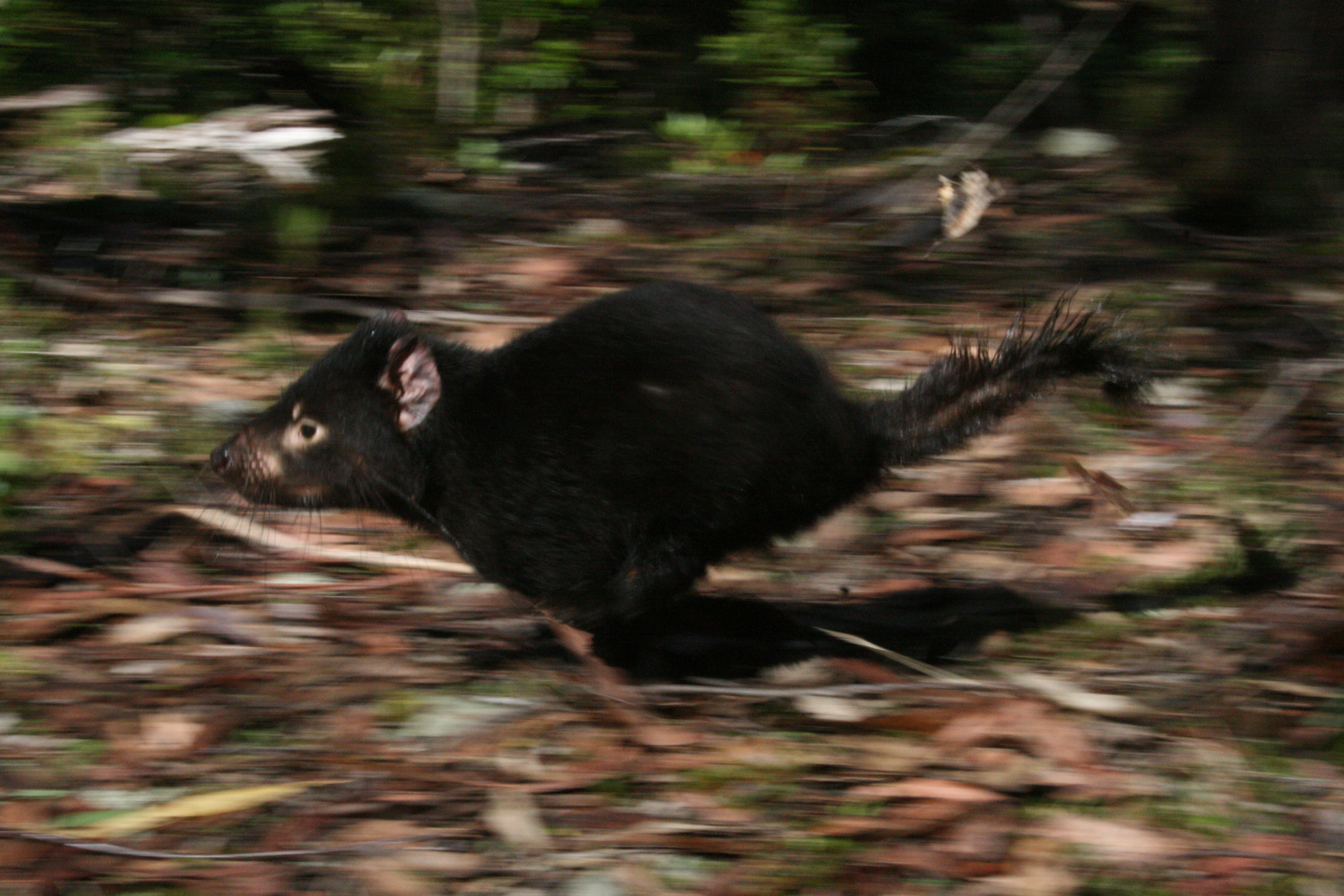
Well done Patrick, we are so proud of you!!!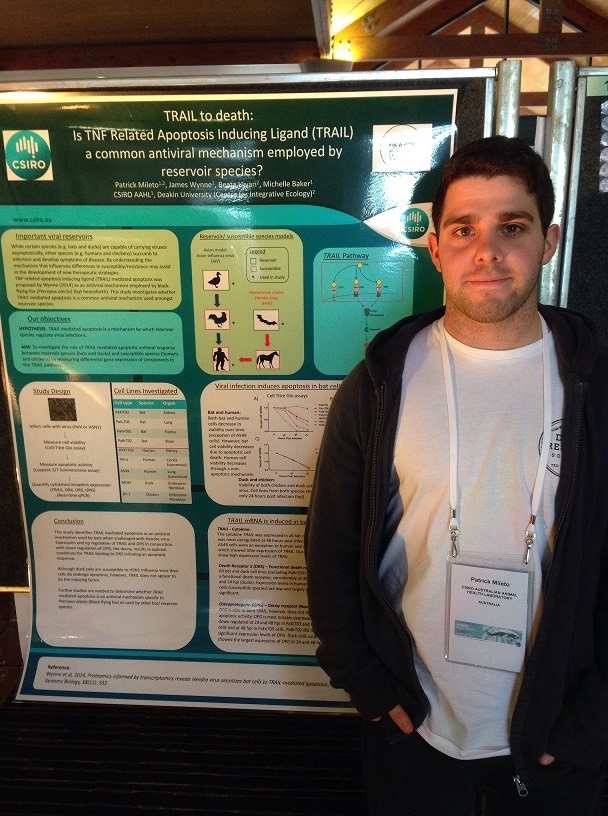





Nynke Raven and Kimberly Pinch receive the prestigious Student Travel Awards to attend GSA2015. We are so proud of you girls!!! Well done! http://www.genetics.org.au/2015-conference/
Evolutionary Applications’ Highlights has featured our DFTD epigenetics article as one of the exciting papers using evolutionary biology to address questions of practical importance.
Read more about it: http://onlinelibrary.wiley.com/doi/10.1111/eva.12040/abstract
 SPEAKER: Prof Thomas Madsen, School of Biological Sciences, University of Wollongong
DATE: Friday, 15th May 2015
LOCATION: Warrnambool Campus, Room G1.01 (Percy Baxter LT)
TIME: 12:00 noon
Seminar will also be video linked to the following campuses: Geelong Campus at Waurn Ponds, Room ka5.303 and Melbourne Campus at Burwood, Room T3.05
ABSTRACT: Will climate change threaten wildlife populations by gradual shifts in mean conditions, or by increased frequency of extreme weather events?
Based on long-term data (from 1991 to 2014), the aim of the present study was to analyze and compare the sensitivity of predator-prey demography to extreme climatic events versus normal, albeit highly variable, annual deviations in climatic conditions in the Australian wet-dry tropics.
From 1991 to 2005, predators (water pythons, Liasis fuscus) and their main prey (dusky rats, Rattus colletti) showed significant climate-driven fluctuations in numbers. These fluctuations were, however, trivial compared to the impact of two massive but brief deluges in 2007 and 2011, which virtually eliminated the dusky rats. The two floods resulted in the pythons experiencing an unprecedented famine in 7 out of the last 8 years causing a massive shift in python demography i.e. a significant reduction in feeding rates, reproductive output, growth rates, relative body mass, survival, mean body length and numbers (from 3173 in 1992 to 96 in 2013).
Our results demonstrate that attempts to predict faunal responses to climate change, even if based on long-term studies, may be doomed to failure. Consequently, biologists may need to confront the uncomfortable truth that increased frequency of brief unpredictable bouts of extreme weather can influence populations far more than gradual deviations in mean climatic conditions.
BIO: Thomas Madsen is firm believer in the importance of conducting long-term field studies in order to make any relevant/significant conclusions about evolutionary processes.
For example, his study on Swedish adders (commenced in 1981 and still running) has revealed the evolutionary significance polyandry. His study water pythons and dusky rats in the Top End of Australia (initiated in 1989 and is still running in collaboration with Beata Ujvari) has revealed the dramatic effects of climate (and climate change) on the population demography of predators-prey interactions in the Australian wet-dry tropics.
Appointments with guest speaker may be made via Graeme Hays
Check out our new paper: Evolutionary perspective of cancer: myth, metaphors and reality.
Evolutionary Applications. DOI: 10.1111/eva.12265
 The Wild Genes Group