Seminar by Professor Arthur Georges – Sex in dragons: a tale of unfolding complexity, bringing in the genetic work to inform the ecological side of the story

Arthur GeorgesSPEAKER: Professor Arthur Georges, Institute for Applied Ecology, University of Canberra, ACT

DATE: Friday, 29th July 2016
LOCATION: Geelong Campus at Waurn Ponds, Room KA4.207
TIME: 1:30pm
Seminar will also be video linked to the following campuses: Melbourne Campus at Burwood, Burwood Corporate Centre (BCC) and Warrnambool Campus, Room J2.22

External visitors – wish to join us and connect to our seminars?

  • You may connect to the live seminar via *N SEBE VMP LES Seminars52236958@deakin.edu.au [ID.36958], or via the methods listed HERE.
  • For Deakin staff and students, please join via Skype for Business (Lync).
  • Could not log in? More info on how to connect is available HERE.
  • Please note that connection is only available while a seminar is taking place. See exact times.

As a courtesy, we request that when connecting to the seminar that you mute your microphone unless you are required to speak, this would ensure that the sound from the speaker to the audience is not disrupted by feedback from your microphone – thank you!

ABSTRACT: Although phenotype is governed by underlying genotype, the translation of the genetic blueprint to traits possessed by the individual is under varying degrees of environmental influence, leading to phenotypic variation in traits with a common genetic underpinning.

Sex of an individual, at least in vertebrates, was once thought to be strictly determined by the complement of chromosomes passed to the offspring from the parents. The prevailing view of a 1:1 correspondence between genotype and sexual phenotype (genetic sex determination or GSD) that is so prevalent in mammals and birds, fell away with the discovery of astonishing diversity in the mechanisms of sex determination of many lineages of reptile and fish.

Environmental sex determination is now well established in these groups, and temperature early in development is the primary factor involved (hence, temperature-dependent sex determination, or TSD). Indeed, sex determination in reptiles is seen as one of the most profound examples of developmental plasticity among vertebrates.

Furthermore, it falls in a special class of phenotypic plasticity, along with castes in bees and winged/winglessness in aphids – a polyphenism with two states, whereby intermediate forms are either not viable or with severely compromised fitness.

In this presentation, the focus will be on a special case of sex determination where genotype and environment interact to determine sex, and discuss the mechanisms by which temperature may bring influence.

The dragon lizard, Pogona vitticeps, has well defined sex chromosomes – a ZZ/ZW system as in birds – yet temperature can over-ride the genetic signal to reverse the ZZ male trajectory to a female phenotype, both in the laboratory and in the wild.

This is one example where developmental plasticity can drive rapid evolutionary responses to changing climate, responses that challenge our understanding of the evolution of temperature-dependent sex determination.

BIO: Professor Arthur Georges is an ecologist and herpetologist whose research interests lie in the evolution, ecology and systematics of Australian reptiles. A fundamental interest in these fascinating animals takes him into the field and the laboratory to learn more of their biology and to apply what he has learned in solving contemporary challenges for their conservation.

Arthur recently led the consortium to generate an annotated genome sequence for the Australian dragon lizard, Pogona vitticeps, which he and his team are using to probe the intricacies of sex determination in reptiles.

Appointments with guest speaker may be made via Beata Ujvari.
Do cell-autonomous and non-cell-autonomous effects drive the structure of tumor ecosystems?

Beata U.

Beata U.

Title: Do cell-autonomous and non-cell-autonomous effects drive the structure of tumor ecosystems?

Authors: Tissot, T; Ujvari, B; Solary, E; Lassus, P; Roche, B; Thomas, F

Source: BIOCHIMICA ET BIOPHYSICA ACTA-REVIEWS ON CANCER, 1865 (2):147-154, APR 2016

Brief summary of the paper: By definition, a driver mutation confers a growth advantage to the cancer cell in which it occurs, while a passenger mutation does not: the former is usually considered as the engine of cancer progression, while the latter is not.

Actually, the effects of a given mutation depend on the genetic background of the cell in which it appears, thus can differ in the subclones that form a tumor. In addition to cell-autonomous effects generated by the mutations, non-cell-autonomous effects shape the phenotype of a cancer cell.

Here, we review the evidence that a network of biological interactions between subclones drives cancer cell adaptation and amplifies intra-tumor heterogeneity. Integrating the role of mutations in tumor ecosystems generates innovative strategies targeting the tumor ecosystem’s weaknesses to improve cancer treatment.

The WGG @ The Society for Molecular Biology & Evolution 2016

SMBE 2016

Strong representation by the WGG (Wild Genes Group) at the SMBE 2016 – the annual meeting of the Society for Molecular Biology and Evolution at the Gold Coast Convention & Exhibition Centre, Queensland, Australia (@OfficialSMBE).

A big ‘thank you’ to SMBE for awarding Kimberly Pinch and Nynke Raven with student travel awards and making it possible for them to attend SMBE 2016!

This slideshow requires JavaScript.


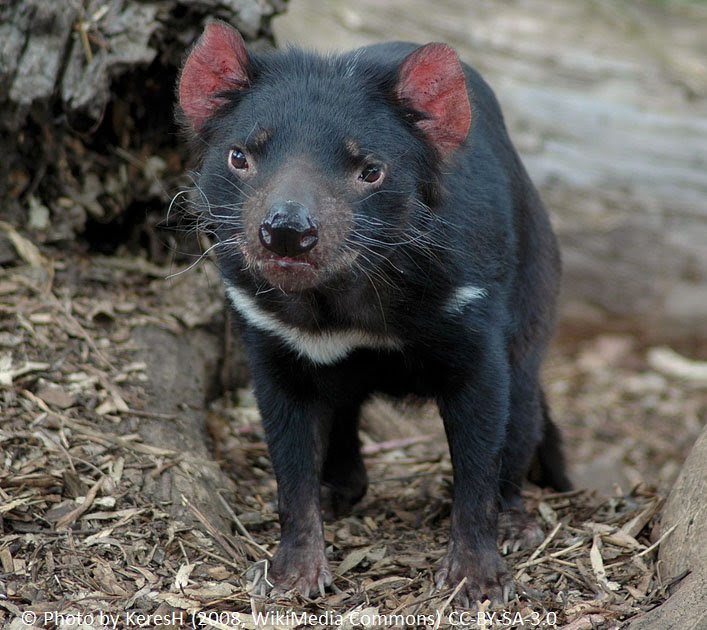
Could a discovery of several antibodies, that seem to fight off the disease, stop the parasitic cancer wiping out Tasmanian devils?

Tasmanian DevilResearchers have been desperately trying to develop treatments against the disease, but despite some promising progress towards a vaccine, for the most part, study after study has come back with nothing but bad news.

Could ‘active immunotherapy’ be the solution? Read more on this via ScienceAlert.com and find out what  lead researcher Beata Ujvari, from Deakin University in Australia has to say.

More info can also be found via:

  1. Deakin Media: Natural antibodies could combat Tasmanian devil cancer
  2. Nature – Scientific Reports: Immunoglubolin dynamics and cancer prevalence in Tasmanian devils

Predictable evolution: bad news for toads, good news for their predators | @GrrlScientist http://gu.com/p/4c628/stw

Beautiful summary of our work by @GrrrlScientist. Check it out at:

http://www.theguardian.com/science/grrlscientist/2015/sep/16/predictable-evolution-bad-news-for-toads-good-news-for-their-predators

and share it if you like it!

Widespread convergence in toxin resistance by predictable molecular evolution

Goanna 32_with blue flowers smallCheck out our new paper in PNAS!

http://www.pnas.org/content/early/2015/09/02/1511706112.abstract?sid=ecdba96d-5537-4518-b7cc-cad430a72ba0

https://www.newscientist.com/article/dn28138-resistance-to-toad-toxin-shows-evolution-can-repeat-itself/evolution-can-repeat-itself/

Characterization of antibody V segment diversity in the Tasmanian devil (Sarcophilus harrisii) – now availabe online

Tasmanian devils have highly complex and ancient immunoglobulin light chain variable repertoires. Our article with Kathy Belov just gone online. Check out:

http://www.sciencedirect.com/science/article/pii/S0165242715001750Running devil

Nynke Raven and Kimberly Pinch receive the Student Travel Awards to attend GSA2015

Nynke Raven and Kimberly Pinch receive the prestigious Student Travel Awards to attend GSA2015. We are so proud of you girls!!!  Well done!  http://www.genetics.org.au/2015-conference/BANNER 110414