The molecular evolution of cancer associated genes in mammals

Authors: Nick MacDonald, Nynke Raven, Wendy Diep, Samantha Evans, Senuri Pannipitiya, Georgina Bramwell, Caitlin Vanbeek, Frédéric Thomas, Tracey Russell, Antoine M. Dujon, Marina Telonis-Scott & Beáta Újvári

Source: Scientific Reports (May 2024)

Abstract

Cancer is a disease that many multicellular organisms have faced for millions of years, and species have evolved various tumour suppression mechanisms to control oncogenesis. Although cancer occurs across the tree of life, cancer related mortality risks vary across mammalian orders, with Carnivorans particularly affected.

Evolutionary theory predicts different selection pressures on genes associated with cancer progression and suppression, including oncogenes, tumour suppressor genes and immune genes. Therefore, we investigated the evolutionary history of cancer associated gene sequences across 384 mammalian taxa, to detect signatures of selection across categories of oncogenes (GRB2, FGL2 and CDC42), tumour suppressors (LITAF, Casp8 and BRCA2) and immune genes (IL2, CD274 and B2M).

This approach allowed us to conduct a fine scale analysis of gene wide and site-specific signatures of selection across mammalian lineages under the lens of cancer susceptibility. Phylogenetic analyses revealed that for most species the evolution of cancer associated genes follows the species’ evolution.

The gene wide selection analyses revealed oncogenes being the most conserved, tumour suppressor and immune genes having similar amounts of episodic diversifying selection. Despite BRCA2’s status as a key caretaker gene, episodic diversifying selection was detected across mammals. The site-specific selection analyses revealed that the two apoptosis associated domains of the Casp8 gene of bats (Chiroptera) are under opposing forces of selection (positive and negative respectively), highlighting the importance of site-specific selection analyses to understand the evolution of highly complex gene families.

Our results highlighted the need to critically assess different types of selection pressure on cancer associated genes when investigating evolutionary adaptations to cancer across the tree of life. This study provides an extensive assessment of cancer associated genes in mammals with highly representative, and substantially large sample size for a comparative genomic analysis in the field and identifies various avenues for future research into the mechanisms of cancer resistance and susceptibility in mammals.

Transmissible cancers, the genomes that do not melt down

Authors: Georgina Bramwell, James DeGregori, Frédéric Thomas, Beáta Újvári

Source: Evolution (Apr 2024)

Abstract

Evolutionary theory predicts that the accumulation of deleterious mutations in asexually reproducing organisms should lead to genomic decay. Clonally reproducing cell lines, i.e., transmissible cancers, when cells are transmitted as allografts/xenografts, break these rules and survive for centuries and millennia.

The currently known 11 transmissible cancer lineages occur in dogs (canine venereal tumour disease), in Tasmanian devils (devil facial tumor diseases, DFT1 and DFT2), and in bivalves (bivalve transmissible neoplasia). Despite the mutation loads of these cell lines being much higher than observed in human cancers, they have not been eliminated in space and time.

Here, we provide potential explanations for how these fascinating cell lines may have overcome the fitness decline due to the progressive accumulation of deleterious mutations and propose that the high mutation load may carry an indirect positive fitness outcome.

We offer ideas on how these host–pathogen systems could be used to answer outstanding questions in evolutionary biology. The recent studies on the evolution of these clonal pathogens reveal key mechanistic insight into transmissible cancer genomes, information that is essential for future studies investigating how these contagious cancer cell lines can repeatedly evade immune recognition, evolve, and survive in the landscape of highly diverse hosts.

Evolution of cancer resistance in the animal kingdom

Authors: Frédéric Thomas, Beáta Újvári, Antoine M Dujon

Source: Medecine sciences (Article in French) (Apr 2024)

Abstract

Cancer is an inevitable collateral problem inherent in the evolution of multicellular organisms, which appeared at the end of the Precambrian. Faced to this constraint, a range of diverse anticancer defenses has evolved across the animal kingdom. Today, investigating how animal organisms, especially those of large size and long lifespan, manage cancer-related issues has both fundamental and applied outcomes, as it could inspire strategies for preventing or treating human cancers.

In this article, we begin by presenting the conceptual framework for understanding evolutionary theories regarding the development of anti-cancer defenses. We then present a number of examples that have been extensively studied in recent years, including naked mole rats, elephants, whales, placozoa, xenarthras (such as sloths, armadillos and anteaters) and bats.

The contributions of comparative genomics to understanding evolutionary convergences are also discussed. Finally, we emphasize that natural selection has also favored anti-cancer adaptations aimed at avoiding mutagenic environments, for example by maximizing immediate reproductive efforts in the event of cancer. Exploring these adaptive solutions holds promise for identifying novel approaches to improve human health.

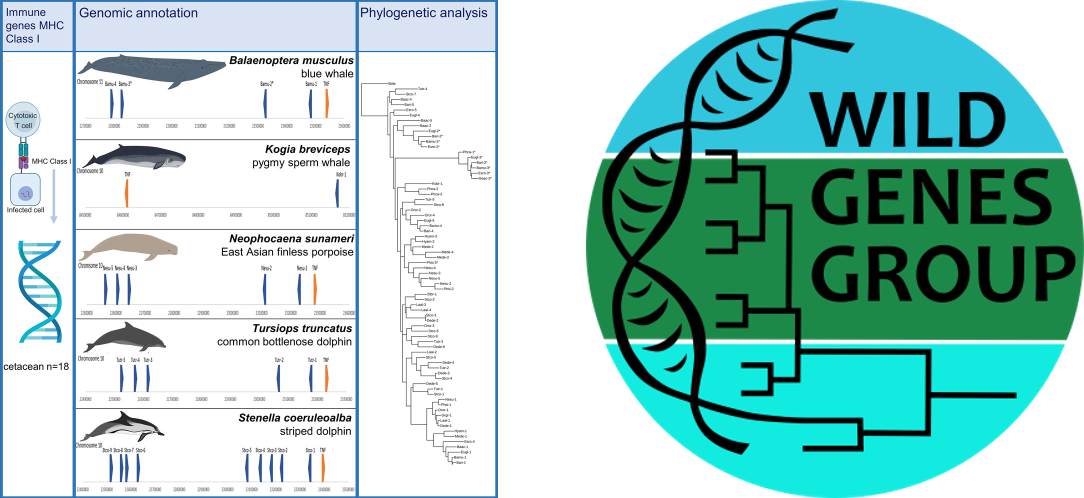
Organisation and evolution of the major histocompatibility complex class I genes in cetaceans

Authors: Grace Day, Kate Robb, Andrew Oxley, Marina Telonis-Scott, Beáta Újvári

Source: iScience (Apr 2024)

Abstract

A quarter of marine mammals are at risk of extinction, with disease and poor habitat quality contributing to population decline. Investigation of the Major Histocompatibility Complex (MHC) provides insight into species’ capacity to respond to immune and environmental challenges.

The eighteen available cetacean chromosome level genomes were used to annotate MHC Class I loci, and to reconstruct the phylogenetic relationship of the described loci. The highest number of loci was observed in the striped dolphin (Stenella coeruleoalba), while the least was observed in the pygmy sperm whale (Kogia breviceps) and rough toothed dolphin (Steno bredanensis).

Of the species studied, Mysticetes had the most pseudogenes. Evolutionarily, MHC Class I diverged before the speciation of cetaceans. Yet, locus one was genomically and phylogenetically similar in many species, persisting over evolutionary time. This characterisation of MHC Class I in cetaceans lays the groundwork for future population genetics and MHC expression studies.

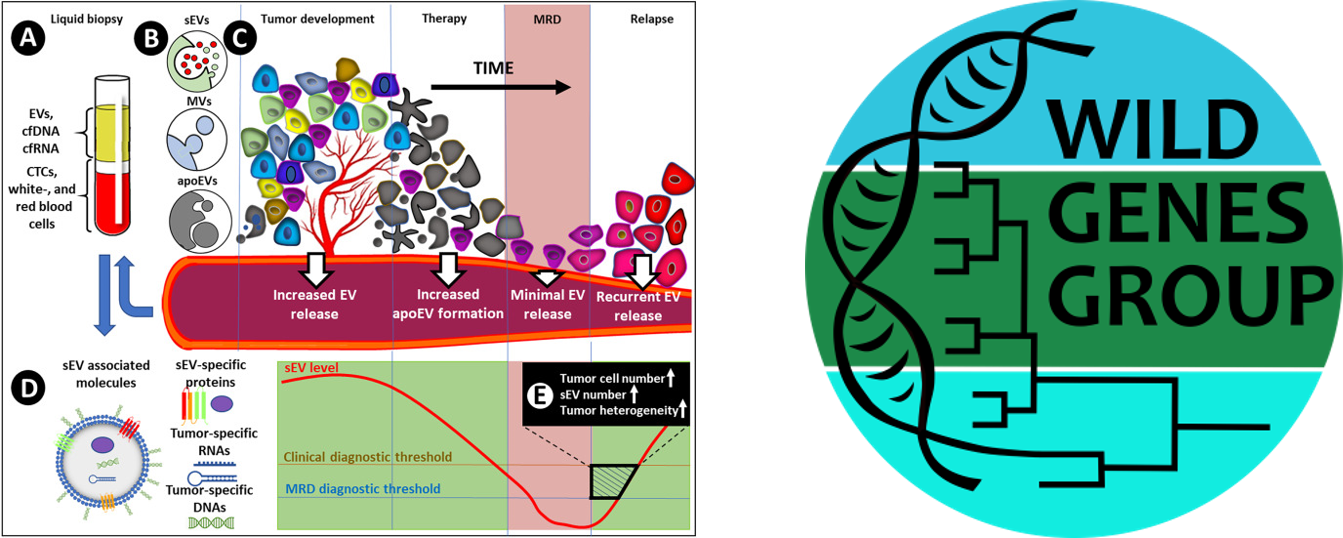
Small extracellular vesicles from surviving cancer cells as multiparametric monitoring tools of measurable residual disease and therapeutic efficiency

Authors: Gábor Valcz, Edit I Buzás, Robert A Gatenby, Beáta Újvári, Béla Molnár

Source: Biochimica et Biophysica Acta (BBA) – Reviews on Cancer (Mar 2024)

Abstract

Although conventional anti-cancer therapies remove most cells of the tumor mass, small surviving populations may evolve adaptive resistance strategies, which lead to treatment failure. The size of the resistant population initially may not reach the threshold of clinical detection (designated as measurable residual disease/MRD) thus, its investigation requires highly sensitive and specific methods.

Here, we discuss that the specific molecular fingerprint of tumor-derived small extracellular vesicles (sEVs) is suitable for longitudinal monitoring of MRD. Furthermore, we present a concept that exploiting the multiparametric nature of sEVs may help early detection of recurrence and the design of dynamic, evolution-adjusted treatments.

Maternally derived avian corticosterone affects offspring genome-wide DNA methylation in a passerine species

Authors: Anna Miltiadous, Damien L. Callahan, Antoine M. Dujon, Katherine L. Buchanan, Lee A. Rollins

Source: Molecular Ecology (Jan 2024)

Abstract

Avian embryos develop in an egg composition which reflects both maternal condition and the recent environment of their mother. In birds, yolk corticosterone (CORT) influences development by impacting pre- and postnatal growth, as well as nestling stress responses and development. One possible mechanism through which maternal CORT may affect offspring development is via changes to offspring DNA methylation.

We sought to investigate this, for the first time in birds, by quantifying the impact of manipulations to maternal CORT on offspring DNA methylation. We non-invasively manipulated plasma CORT concentrations of egg-laying female zebra finches (Taeniopygia castanotis) with an acute dose of CORT administered around the time of ovulation and collected their eggs.

We then assessed DNA methylation in the resulting embryonic tissue and in their associated vitelline membrane blood vessels, during early development (5 days after lay), using two established methods – liquid chromatography–mass spectrometry (LC–MS) and methylation-sensitive amplification fragment length polymorphism (MS-AFLP). LC–MS analysis showed that global DNA methylation was lower in embryos from CORT-treated mothers, compared to control embryos. In contrast, blood vessel DNA from eggs from CORT-treated mothers showed global methylation increases, compared to control samples. There was a higher proportion of global DNA methylation in the embryonic DNA of second clutches, compared to first clutches. Locus-specific analyses using MS-AFLP did not reveal a treatment effect.

Our results indicate that an acute elevation of maternal CORT around ovulation impacts DNA methylation patterns in their offspring. This could provide a mechanistic understanding of how a mother’s experience can affect her offspring’s phenotype.

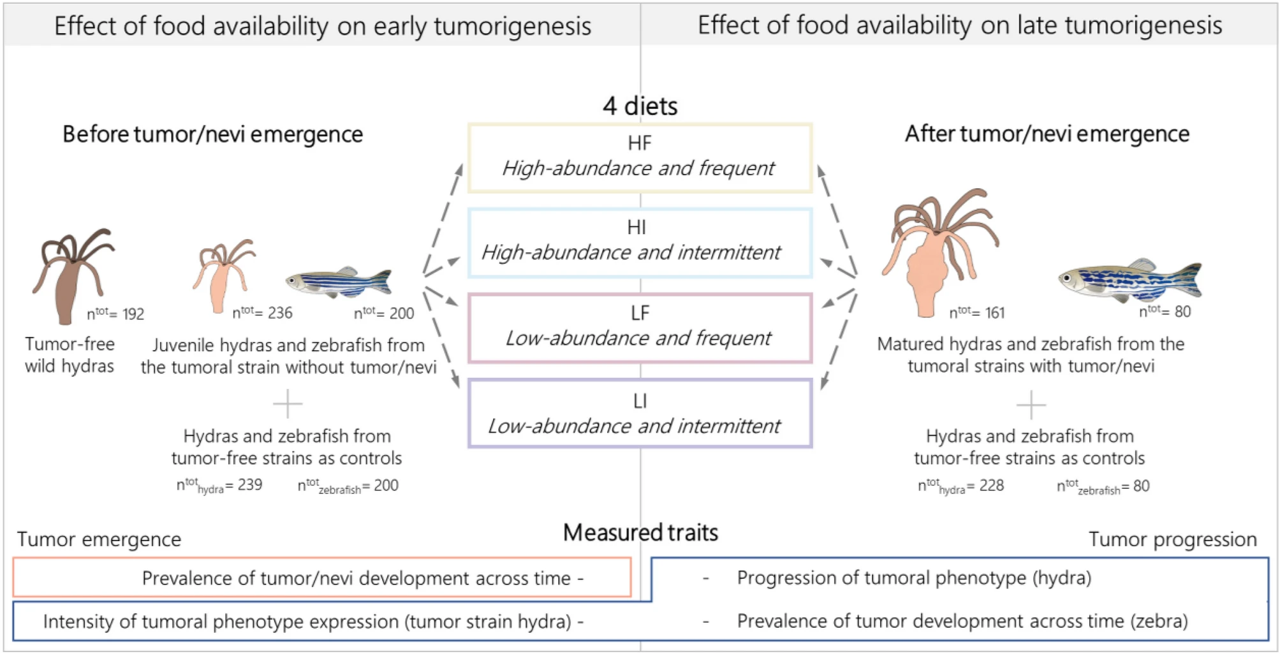
The impact of food availability on tumorigenesis is evolutionarily conserved

Authors: Sophie Tissot, Lena Guimard, Jordan Meliani, Justine Boutry, Antoine M. Dujon, Jean-Pascal Capp, Jácint Tökölyi, Peter A. Biro, Christa Beckmann, Laura Fontenille, Nam Do Khoa, Rodrigo Hamede, Benjamin Roche, Beata Ujvari, Aurora M. Nedelcu & Frédéric Thomas

Source: Scientific Reports (Nov 2023)

Abstract

The inability to control cell proliferation results in the formation of tumors in many multicellular lineages. Nonetheless, little is known about the extent of conservation of the biological traits and ecological factors that promote or inhibit tumorigenesis across the metazoan tree. Particularly, changes in food availability have been linked to increased cancer incidence in humans, as an outcome of evolutionary mismatch.

Here, we apply evolutionary oncology principles to test whether food availability, regardless of the multicellular lineage considered, has an impact on tumorigenesis. We used two phylogenetically unrelated model systems, the cnidarian Hydra oligactis and the fish Danio rerio, to investigate the impact of resource availability on tumor occurrence and progression. Individuals from healthy and tumor-prone lines were placed on four diets that differed in feeding frequency and quantity. For both models, frequent overfeeding favored tumor emergence, while lean diets appeared more protective. In terms of tumor progression, high food availability promoted it, whereas low resources controlled it, but without having a curative effect.

We discuss our results in light of current ideas about the possible conservation of basic processes governing cancer in metazoans (including ancestral life history trade-offs at the cell level) and in the framework of evolutionary medicine.

Toxoplasma gondii infection in people with schizophrenia is related to higher hair glucocorticoid levels

Authors: Emy Beaumont, Jacques Brodeur, Frédéric Thomas, Antoine M Dujon; Consortium Signature; Sonia J Lupien

Source: Frontiers in Psychiatry (Feb 2024)

Abstract

Introduction: Toxoplasma gondii (TG) is a common protozoan parasite infecting approximately one third of the human population. Animal studies have shown that this parasite can manipulate its host behavior. Based on this, human studies have assessed if TG can be involved in mental health disorders associated with important behavioral modifications such as schizophrenia. However, results have been discrepant. Given that TG has a strong impact on fear and risk-taking processes in animal studies and that fear and risk-taking behaviors are associated with the human stress response, we tested whether glucocorticoid biomarkers (salivary and hair) differ in people with schizophrenia and controls as a function of TG status.

Methods: We measured TG antibodies in blood samples, as well as salivary and hair glucocorticoid levels in 226 people with schizophrenia (19.9% women, mean age = 39 years old) and 129 healthy individuals (controls) (45.7% women, mean age = 41 years old).

Results: The results showed that people with schizophrenia infected with TG presented significantly higher hair glucocorticoid concentrations than non-infected people with schizophrenia. This effect was not found in control participants. No effect was observed for salivary glucocorticoid levels. Additionally, there were no associations between TG infection and positive psychotic symptoms nor impulsivity.

Discussion: These results show that people with schizophrenia present high levels of hair glucocorticoid levels only when they are infected with TG. Further studies performed in populations suffering from other mental health disorders are needed to determine if this effect is specific to schizophrenia, or whether it is generalized across mental health disorders.

Complex associations between cancer progression and immune gene expression reveals early influence of transmissible cancer on Tasmanian devils

Authors: Nynke Raven, Marcel Klaassen, Thomas Madsen, Menna Jones, David G. Hamilton, Manuel Ruiz-Aravena, Frederic Thomas, Rodrigo K. Hamede & Beata Ujvari

Source: Frontiers in Immunology (Mar 2024)

Abstract

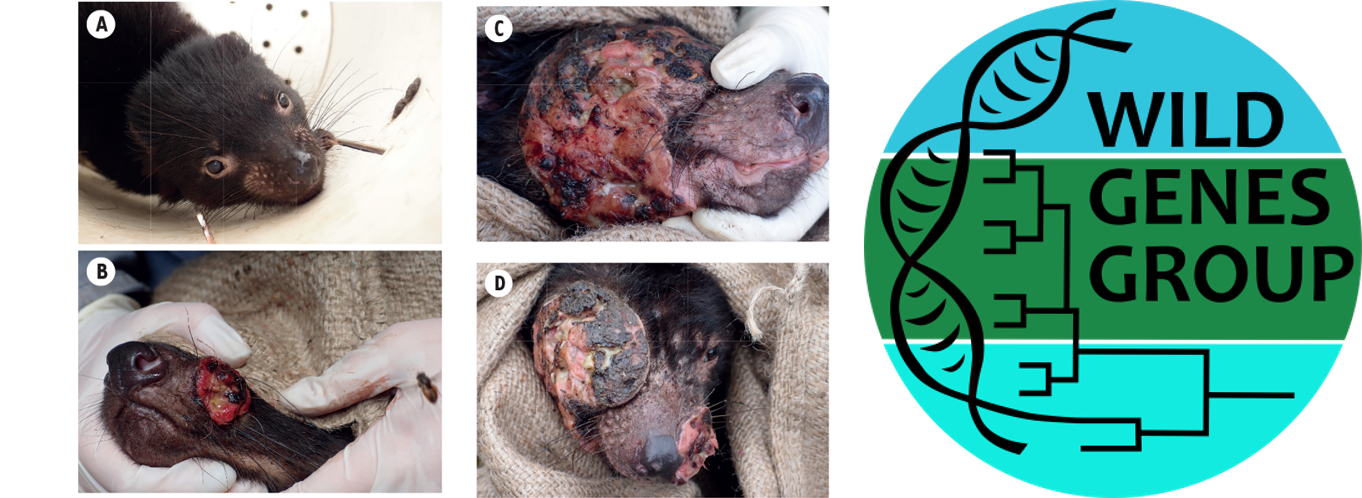
The world’s largest extant carnivorous marsupial, the Tasmanian devil, is challenged by Devil Facial Tumor Disease (DFTD), a fatal, clonally transmitted cancer. In two decades, DFTD has spread across 95% of the species distributional range. A previous study has shown that factors such as season, geographic location, and infection with DFTD can impact the expression of immune genes in Tasmanian devils.

To date, no study has investigated within-individual immune gene expression changes prior to and throughout the course of DFTD infection. To explore possible changes in immune response, we investigated four locations across Tasmania that differed in DFTD exposure history, ranging between 2 and >30 years. Our study demonstrated considerable complexity in the immune responses to DFTD. The same factors (sex, age, season, location and DFTD infection) affected immune gene expression both across and within devils, although seasonal and location specific variations were diminished in DFTD affected devils.

We also found that expression of both adaptive and innate immune genes starts to alter early in DFTD infection and continues to change as DFTD progresses. A novel finding was that the lower expression of immune genes MHC-II, NKG2D and CD8 may predict susceptibility to earlier DFTD infection. A case study of a single devil with regressed tumor showed opposite/contrasting immune gene expression patterns compared to the general trends observed across devils with DFTD infection.

Our study highlights the complexity of DFTD’s interactions with the host immune system and the need for long-term studies to fully understand how DFTD alters the evolutionary trajectory of devil immunity.

In vitro competition between two transmissible cancers and potential implications for their host, the Tasmanian devil

Authors: Anne-Lise Gérard, Rachel S Owen, Antoine M. Dujon, Benjamin Roche, Rodrigo Hamede, Frédéric Thomas, Beata Ujvari, Hannah V Siddle

Source: Evolutionary Applications (Mar 2024)

Abstract

Since the emergence of a transmissible cancer, devil facial tumour disease (DFT1), in the 1980s, wild Tasmanian devil populations have been in decline. In 2016, a second, independently evolved transmissible cancer (DFT2) was discovered raising concerns for survival of the host species.

Here, we applied experimental and modelling frameworks to examine competition dynamics between the two transmissible cancers in vitro. Using representative cell lines for DFT1 and DFT2, we have found that in monoculture, DFT2 grows twice as fast as DFT1 but reaches lower maximum cell densities. Using co-cultures, we demonstrate that DFT2 outcompetes DFT1: the number of DFT1 cells decreasing over time, never reaching exponential growth. This phenomenon could not be replicated when cells were grown separated by a semi-permeable membrane, consistent with exertion of mechanical stress on DFT1 cells by DFT2.

A logistic model and a Lotka-Volterra competition model were used to interrogate monoculture and co-culture growth curves, respectively, suggesting DFT2 is a better competitor than DFT1, but also showing that competition outcomes might depend on the initial number of cells, at least in the laboratory.

We provide theories how the in vitro results could be translated to observations in the wild and propose that these results may indicate that although DFT2 is currently in a smaller geographic area than DFT1, it could have the potential to outcompete DFT1. Furthermore, we provide a framework for improving the parameterization of epidemiological models applied to these cancer lineages, which will inform future disease management.