Check out our new publication: Cancer: an emergent property of disturbed resource-rich environments? Ecology meets personalized medicine.
Evolutionary Applications. Article first published online : 26 MAR 2015, DOI: 10.1111/eva.12232
Check out our new publication: Cancer: an emergent property of disturbed resource-rich environments? Ecology meets personalized medicine.
Evolutionary Applications. Article first published online : 26 MAR 2015, DOI: 10.1111/eva.12232
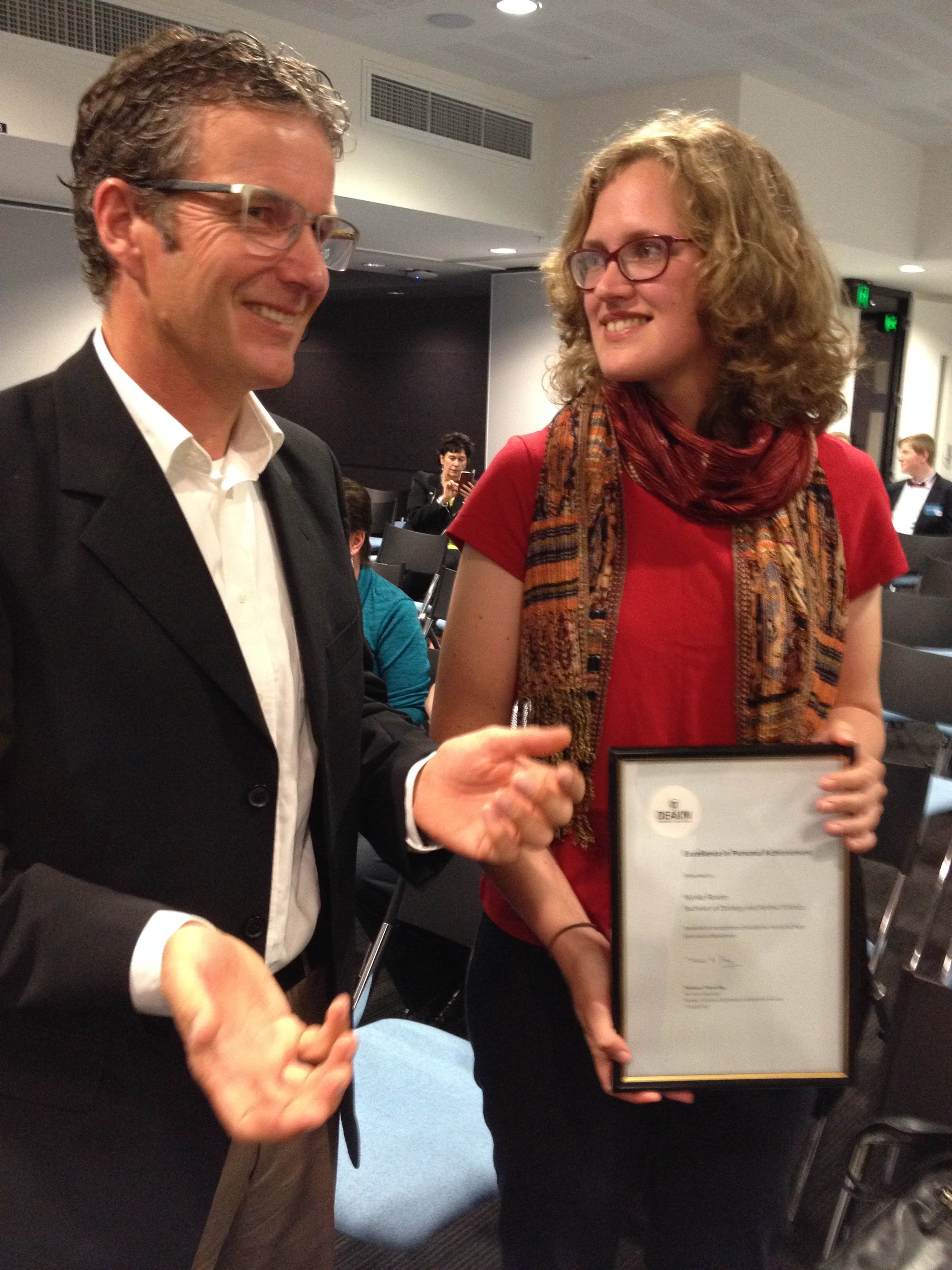
Nynke with Marcel Klaassen (Director of CIE)

Nynke with John Donald (Deputy Head of School)
Nynke Raven just received the Head of School’s Excellence in Personal Achievement Award! We are so proud of you Nynke! Well done!!
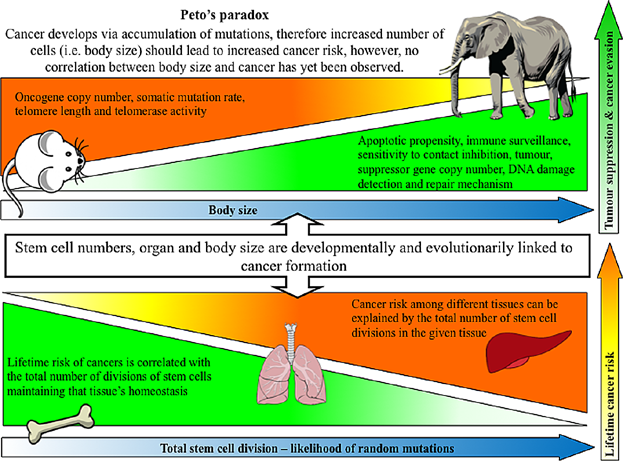
Cancer is a complex disease, with sophisticated cellular mechanisms as the targets of evolutionary processes driven by random genetic and epigenetic mutations. Oncogenesis is evolutionarily linked to stem cell numbers/mutations and organ/body size; therefore, inter-disciplinary frameworks across different scales (cellular, tissue, organs and species) are necessary to decipher cancer progression.
Check out our new article @http://onlinelibrary.wiley.com/doi/10.1002/bies.201500012/abstract
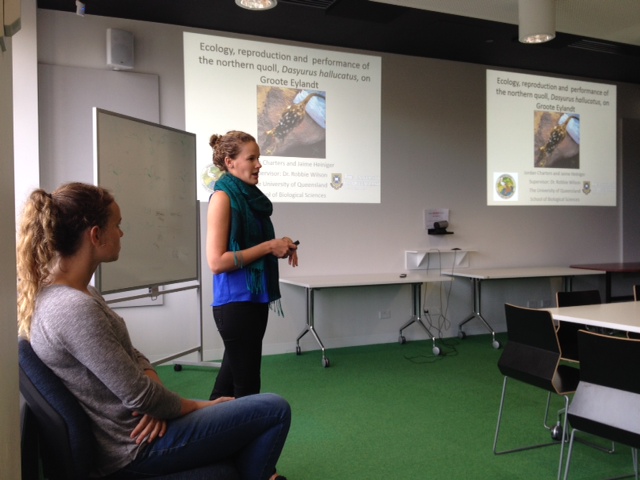
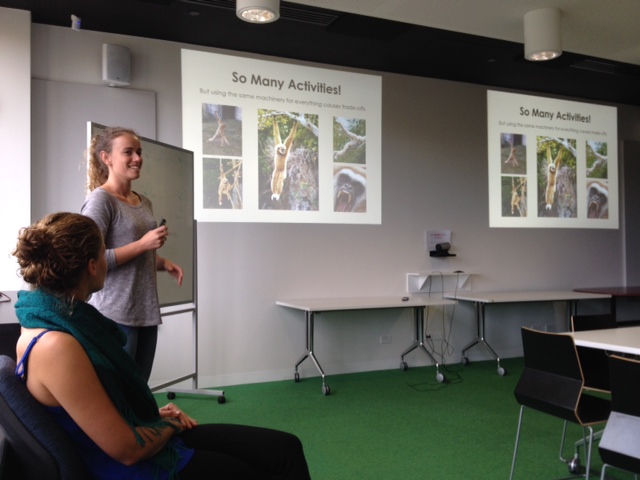 Jaime and Jordi gave awesome talks about their work on quolls at the CIE seminars today. The best seminars of the last 3 years! Well done girls!
Title: Infected Tasmanian devils reveal how cancer cells evolve in response to humans
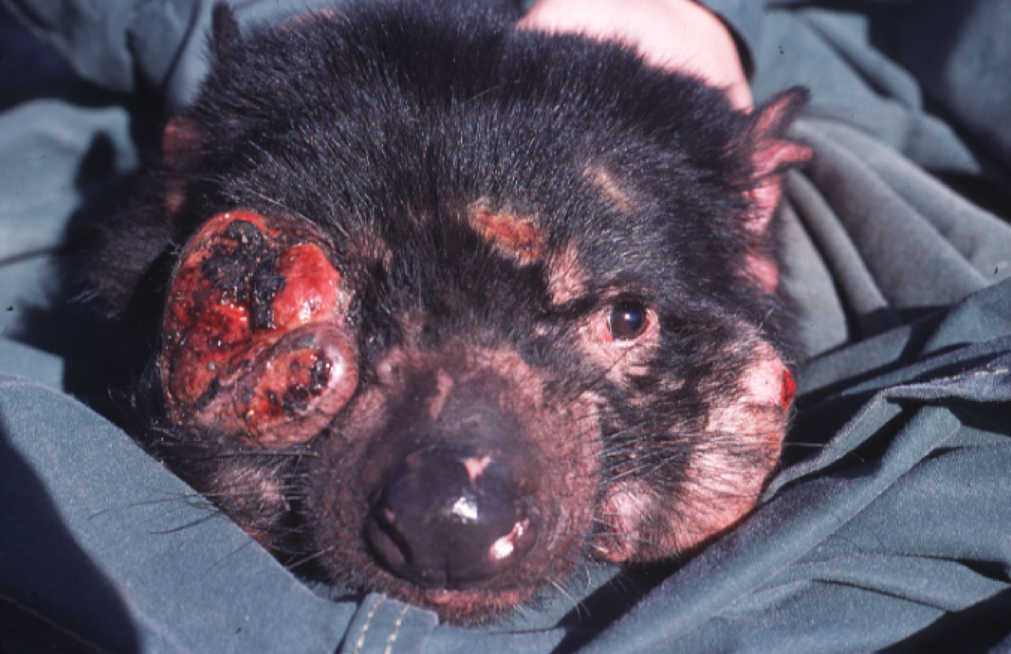
Tasmanian Devil Facial Tumour Disease
Tasmanian Devil Facial Tumor Disease (DFTD) has ravaged the world’s largest carnivorous marsupial since it emerged in 1996, resulting in a population decline of over 90%.
Conservation work to defeat the disease has including removing infected individuals from the population and new research explains how this gives us a unique opportunity to understand how human selection alters the evolution of cancerous cells.
DFTD is an asexually reproducing clonal cell line, which during the last 16 years has been exposed to negative effects as infected devils, approximately 33% of the population, have been removed from one site, the Forestier Peninsula, in Tasmania between 2006 and 2010.
 Naïve large Australian varanid lizards have recently been shown to suffer a massive increase in mortality (> 95%) when attempting to feed on this toxic amphibian. The high susceptibility of Australian varanids to toad toxin is caused by minor mutations in the sodium-potassium-ATPase enzyme.
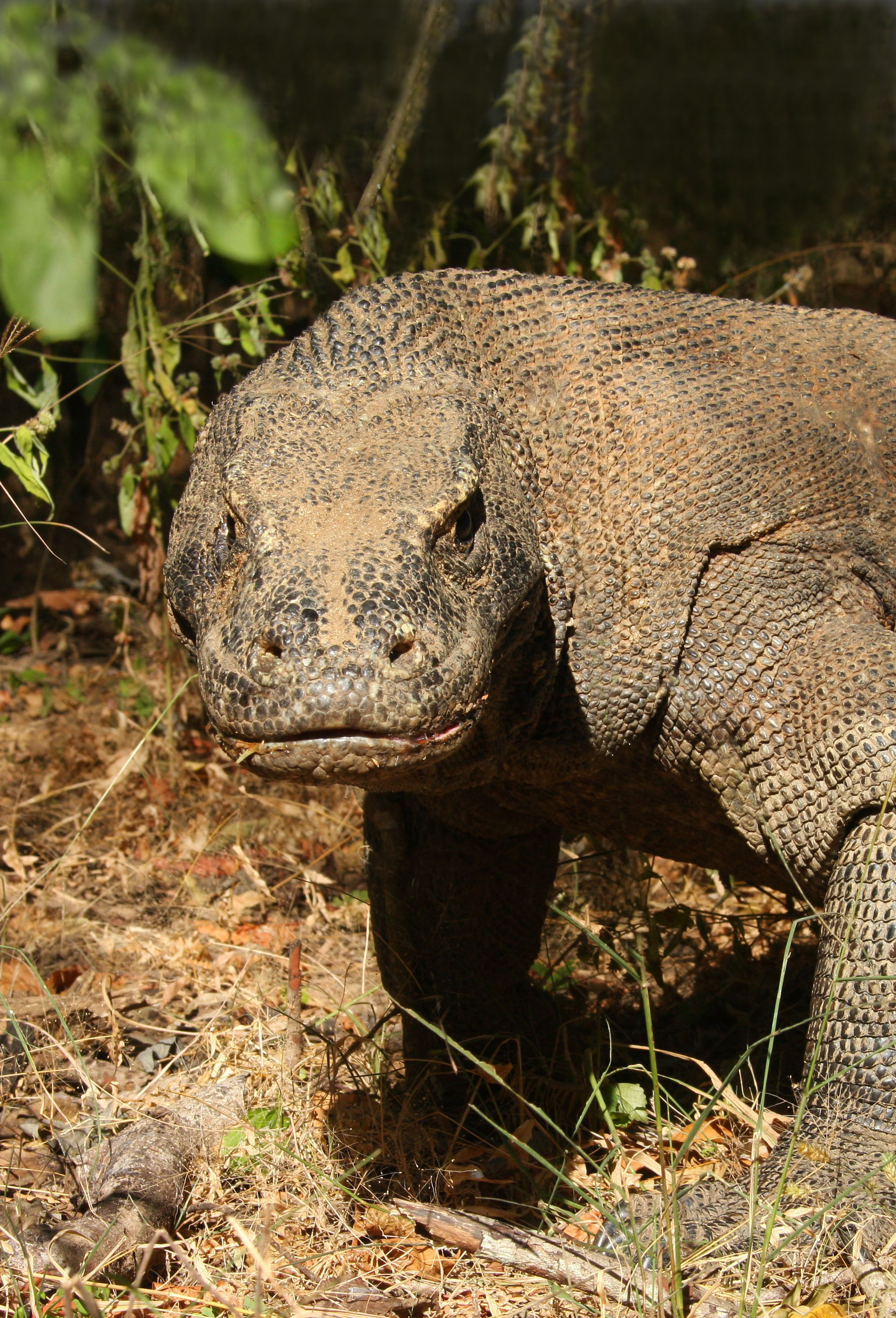
In the present study we show that Komodo dragons (Varanus komodoensis) have similar mutations within this enzyme as observed in Australian varanids demonstrating that dragons are extremely susceptible to toad toxin. During the last decade the black-spined toad (Bufo melanostictus) has been able to invade areas close to the five toad-free islands constituting the habitat of Komodo dragons. An invasion of highly toxic black-spined toads into dragon habitats may therefore cause similar dramatic increase in dragon mortality as recorded in Australian varanids imperiling the long-term survival of this giant and iconic lizard.
Ujvari et al. 2015 Pacific Conservation Biology 20: 363-365.
Title: Anthropogenic selection enhances cancer evolution in Tasmanian devil tumours.
Authors: Beata Ujvari; Anne-Maree Pearse; Kate Swift; Pamela Hodson; Bobby Hua; Stephen Pyecroft; Robyn Taylor; Rodrigo Hamede; Menna Jones; Katherine Belov; Thomas Madsen.
Source: Evolutionary Applications, Volume 7, Issue 2, pages 260–265, February 2014.
Brief summary of the paper: The Tasmanian Devil Facial Tumour Disease (DFTD) provides a unique opportunity to elucidate the long-term effects of natural and anthropogenic selection on cancer evolution.
Since first observed in 1996, this transmissible cancer has caused local population declines by >90%. So far, four chromosomal DFTD variants (strains) have been described and karyotypic analyses of 253 tumours showed higher levels of tetraploidy in the oldest strain.
We propose that increased ploidy in the oldest strain may have evolved in response to effects of genomic decay observed in asexually reproducing organisms. In this study, we focus on the evolutionary response of DFTD to a disease suppression trial.
Tumours collected from devils subjected to the removal programme showed accelerated temporal evolution of tetraploidy compared with tumours from other populations where no increase in tetraploid tumours were observed.
As ploidy significantly reduces tumour growth rate, we suggest that the disease suppression trial resulted in selection favouring slower growing tumours mediated by an increased level of tetraploidy.
Our study reveals that DFTD has the capacity to rapidly respond to novel selective regimes and that disease eradication may result in novel tumour adaptations, which may further imperil the long-term survival of the world’s largest carnivorous marsupial.
 The Wild Genes Group