Curvilinear telomere length dynamics in a squamate reptile

beata-u-jordan-c-thomas-m

Beata U., Jordan C. and Thomas M.

Authors: Beata Ujvari, Peter A. Biro, Jordan E. Charters, Gregory Brown, Kim Heasman, Christa Beckmann, Thomas Madsen

Source: Functional Ecology (published online 14 September 2016)

Brief summary of the paper: The lack of consensus concerning the impact of telomere length (TL) dynamics on survival emphasize the need for additional studies to evaluate the effect of TL on key life history processes

Using both cross-sectional and longitudinal data, we therefore explored age-specific TL dynamics in a squamate reptile; the frillneck lizard (Chlamydosaurus kingii).

Our cross sectional analyses revealed that young lizards had short TL, TL increased in medium aged lizards but TL decreased in older age cohorts, revealing a curvilinear relationship between TL and frillneck lizard age.

Neither our cross-sectional nor our longitudinal analyses revealed any association between TL dynamics and lizard survival.

We observed a significant positive relationship between TL and telomerase expression (TE), suggesting that TE is a significant determinant of frillneck lizard TL dynamics.

Importantly, our longitudinal analyses revealed a positive relationship between initial TL and telomere attrition rate within individual lizards i.e. lizards with short initial telomeres were subjected to reduced telomere attrition rates compared to lizards with long initial TL.

Our results strongly suggest that TL and TE dynamics in frillneck lizards is not associated with lizard survival but rather reflect an adaptation to maintain TL above a critical minimum length in order to sustain cellular homeostasis.

Seminar by Dr Denis O’Meally – Sequencing the koala genome with long reads

denis_omeallySPEAKER: Dr Denis O’Meally, Centre for Animal Health Innovation, University of Sunshine Coast

DATE: Friday, 16th September 2016
LOCATION: Geelong Campus at Waurn Ponds, Room KA4.207
TIME: 1:30pm
Seminar will also be video linked to the following campuses: Melbourne Campus at Burwood, Burwood Corporate Centre (BCC) and Warrnambool Campus, Room J2.22

External visitors – wish to join us and connect to our seminars?

  • You may connect to the live seminar via *N SEBE VMP LES Seminars 52236958@deakin.edu.au [ID.36958] or via the methods listed HERE.
  • For Deakin staff and students, please join via Skype for Business (Lync).
  • Could not log in? More info on how to connect is available HERE.
  • Please note that connection is only available while a seminar is taking place.

As a courtesy, we request that when connecting to the seminar that you mute your microphone unless you are required to speak, this would ensure that the sound from the speaker to the audience is not disrupted by feedback from your microphone – thank you!

ABSTRACT: The koala, Phascolarctos cinereus, is a biologically unique and evolutionarily distinct arboreal marsupial that is frequently regarded as an ‘iconic symbol of conservation’ due to a range of threatening processes including disease and habitat loss. The Koala Genome Consortium, a multi-disciplinary international collaboration, is using modern genomic and transcriptomic tools to investigate the koala’s unique biology and its particular conservation challenges.

Three geographically separate koalas (two female and one male) were genome sequenced to a depth of 30-100X using a range of platforms (including Illumina and PacBio) and RNAseq for multiple tissues tissues. This presentation will report the koala de novo genome assembly and annotation, including the unusual genomic attributes we have discovered for this iconic, monotypic marsupial.

BIO: Dr Denis O’Meally is a Research Fellow at the University of the Sunshine Coast and a member of the Koala Genome Consortium. His research focuses on the evolution of amniote genomes, using the variation in Australia’s unique fauna to understand how genomes interact with their environment. Denis has broad interests in genome evolution including sex determination and sex chromosomes, immunogenetics and molecular convergence.

Dr O’Meally completed his PhD on reptile sex determination at the Australian National University in 2010 and has held postdoctoral positions at The University of Sydney and University of Canberra. Prior to undertaking a PhD, he was the collection manager for the Evolutionary Biology Unit at the Australian Museum, Sydney.

Appointments with guest speaker may be made via Beata Ujvari.

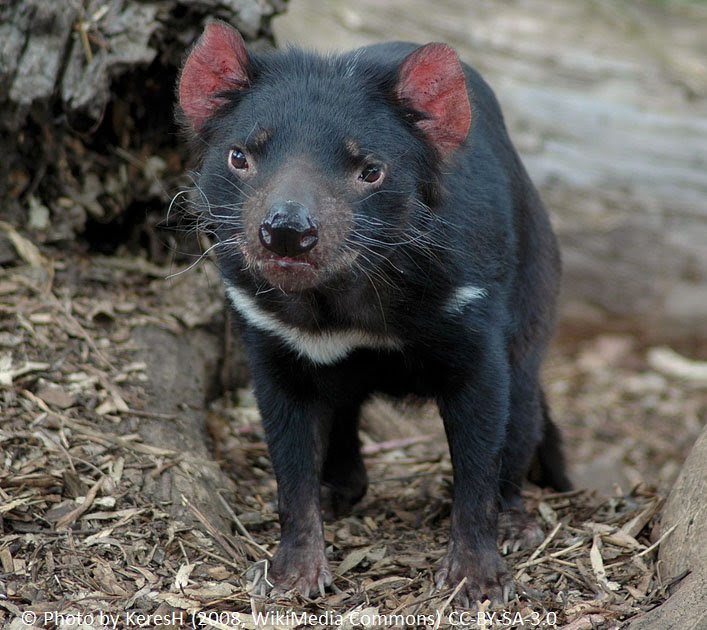
Transmissible cancers, are they more common than thought?

tas_devilAuthors: Ujvari, Beata; Gatenby, Robert A.; Thomas, Frederic

Source: EVOLUTIONARY APPLICATIONS, 9 (5):633-634, JUN 2016

Brief summary of the paper: Although many cancers are associated with infectious agents, only four naturally occurring transmissible cancers have so far been identified in dogs, soft‐shell clams and Tasmanian devils (DFT1 and DFT2). The recent discovery of DFT2 provides an intriguing story to the evolution of transmissible cancers and poses several questions:

  1. How could two transmissible cancers emerge in the same species?
  2. How will the two DFT variants evolve?
  3. Are transmissible cancers rare?

Seminar by A/Professor Robbie Wilson – Measuring success in nature and sport: how animals perform and why it matters

Robbie WilsonSPEAKER: Associate Professor Robbie Wilson, School of Biological Sciences, The University of Queensland

DATE: Friday, 26th August 2016
LOCATION: Geelong Campus at Waurn Ponds, Room KA4.207
TIME: 1:30pm
Seminar will also be video linked to the following campuses: Melbourne Campus at Burwood, Burwood Corporate Centre (BCC) and Warrnambool Campus, Room J2.22

External visitors – wish to join us and connect to our seminars?

  • You may connect to the live seminar via *N SEBE VMP LES Seminars 52236958@deakin.edu.au [ID.36958] or via the methods listed HERE.
  • For Deakin staff and students, please join via Skype for Business (Lync).
  • Could not log in? More info on how to connect is available HERE.
  • Please note that connection is only available while a seminar is taking place.

As a courtesy, we request that when connecting to the seminar that you mute your microphone unless you are required to speak, this would ensure that the sound from the speaker to the audience is not disrupted by feedback from your microphone – thank you!

ABSTRACT: I’m interested in understanding what drives success in physical activities, and I study performance in very different but complementary systems: wild marsupials and professional athletes. The study of humans and wildlife have operated in relative isolation; by bringing these disparate fields together I aim to change the way we study performance — ultimately providing new insights into conservation, evolution and sport development.

In this seminar, I will present data on wild northern quolls, semi- and professional soccer players, and professional tennis players to demonstrate the three factors I believe are fundamental to this new performance paradigm: (1) studying suites of traits, (2) measuring athleticism and skill, and (3) focusing on performance outcomes.

BIO: Robbie Wilson is an Associate Professor and ARC Future Fellow in the School of Biological Sciences at the University of Queensland, where he has been a faculty member since 2006.

Robbie completed his PhD in thermal biology at UQ in 2000 and his undergraduate studies at the University of Sydney in 1993. After completing postdoctoral positions at the University of Antwerp in Belgium and the University of St Andrews in Scotland, Robbie returned to UQ to take up an ARC early career fellowship in 2003.

His research interests are in the ecology of physical performance, with a focus on understanding what drives task success in wild animals and human athletes.

Appointments with guest speaker may be made via Beata Ujvari.

Evolutionary Ecology of Organs: A Missing Link in Cancer Development?

Beata U.

Beata U.

Authors: Frédéric Thomas, Randolph M. Nesse, Robert Gatenby, Cindy Gidoin, François Renaud, Benjamin Roche, Beata Ujvari

SourceTrends in Cancer, Volume 2, Issue 8, p409–415, August 2016

Brief summary of the paper: There is striking variation in the incidence of cancer in human organs. Malignant tumors are common in the colon and breast but rare in the heart and small bowel. The uterus frequently develops benign fibroid tumors but uterine cancers are relatively rare. The organ-specific difference in cancer prevalence has been explained primarily by the relative roles of intrinsic and extrinsic risk factors.

In this opinion article, we propose also considering organs as distinct but connected ecosystems whose different vulnerabilities to malignant transformation may be partially explained by how essential each organ is for survival through the age of reproduction. We present and discuss some of the basic concepts and assumptions of this perspective on evolutionary medicine.

Despite extensive research, we lack a full explanation for why certain tissues exhibit more susceptibility to cancer than others. An approach focusing on the evolutionary ecology of organs could provide intriguing insights that transcend the dichotomist search for intrinsic versus extrinsic risk factors.

Organs in which malignant cells emerge, survive, and proliferate can be viewed as specialized islands in a living landscape, each with its own distinct ecologies.

All organs serve the organism as a whole, but they differ in how crucial they are to survival and reproduction.

Selection for cancer suppression should be stronger for organs that are more essential for the host’s survival and Darwinian fitness.

More information on Beata’s work is also available via:

Seminar by Associate Professor Janine Deakin – Tracking the evolution of devil facial tumour disease

Janine DeakinSPEAKER: Associate Professor Janine Deakin, Institute for Applied Ecology, University of Canberra

DATE: Friday, 12th August 2016
LOCATION: Geelong Campus at Waurn Ponds, Room KA4.207
TIME: 1:30pm
Seminar will also be video linked to the following campuses: Melbourne Campus at Burwood, Burwood Corporate Centre (BCC) and Warrnambool Campus, Room J2.22

External visitors – wish to join us and connect to our seminars?

  • You may connect to the live seminar via *N SEBE VMP LES Seminars 52236958@deakin.edu.au [ID.36958] or via the methods listed HERE.
  • For Deakin staff and students, please join via Skype for Business (Lync).
  • Could not log in? More info on how to connect is available HERE.
  • Please note that connection is only available while a seminar is taking place.

As a courtesy, we request that when connecting to the seminar that you mute your microphone unless you are required to speak, this would ensure that the sound from the speaker to the audience is not disrupted by feedback from your microphone – thank you!

ABSTRACT: Tasmanian devils are currently under the threat of extinction in the wild due to a transmissible tumour known as devil facial tumour (DFT) disease. The unusual feature of this disease is that the tumour cells themselves are the infectious agent, being spread when devils bite each other during social interactions.

By studying DFT chromosomes, it has been possible to trace the evolution of this tumour as it spreads through the population. The comparison of different DFT strains has provided important insight into the evolution of this infectious agent and is helping to determine whether there is a chance of the tumour evolving to a point where devils will be able to survive DFT infections, permitting the survival of the population in the wild.

Cases of transmissible cancers are rare but it appears that a second transmissible facial tumour (DFT2) has been identified in individuals from southern Tasmania. DFT2 is genetically distinct from DFT1. The emergence of a second transmissible tumour raises the questions about the origin of transmissible tumours. Is there something about devils that makes them susceptible to developing these diseases? I will discuss the work my team has been doing on both transmissible tumours.

BIO: Janine is an Associate Professor in the Institute for Applied Ecology at the University of Canberra. She received her PhD in Biology from Macquarie University.

She then carried out postdoctoral research at the University of Texas Health Science Center at San Antonio before returning to Australia to take up a research position at ANU in the Comparative Genomics group.

In 2010, Janine was awarded an ARC Future Fellowship to track the evolution of devil facial tumours but also has research projects on other native Australian species, such as chromosomal speciation in rock-wallabies and sex determination in the central bearded dragon.

Appointments with guest speaker may be made via Beata Ujvari.

Seminar by Professor Arthur Georges – Sex in dragons: a tale of unfolding complexity, bringing in the genetic work to inform the ecological side of the story

Arthur GeorgesSPEAKER: Professor Arthur Georges, Institute for Applied Ecology, University of Canberra, ACT

DATE: Friday, 29th July 2016
LOCATION: Geelong Campus at Waurn Ponds, Room KA4.207
TIME: 1:30pm
Seminar will also be video linked to the following campuses: Melbourne Campus at Burwood, Burwood Corporate Centre (BCC) and Warrnambool Campus, Room J2.22

External visitors – wish to join us and connect to our seminars?

  • You may connect to the live seminar via *N SEBE VMP LES Seminars52236958@deakin.edu.au [ID.36958], or via the methods listed HERE.
  • For Deakin staff and students, please join via Skype for Business (Lync).
  • Could not log in? More info on how to connect is available HERE.
  • Please note that connection is only available while a seminar is taking place. See exact times.

As a courtesy, we request that when connecting to the seminar that you mute your microphone unless you are required to speak, this would ensure that the sound from the speaker to the audience is not disrupted by feedback from your microphone – thank you!

ABSTRACT: Although phenotype is governed by underlying genotype, the translation of the genetic blueprint to traits possessed by the individual is under varying degrees of environmental influence, leading to phenotypic variation in traits with a common genetic underpinning.

Sex of an individual, at least in vertebrates, was once thought to be strictly determined by the complement of chromosomes passed to the offspring from the parents. The prevailing view of a 1:1 correspondence between genotype and sexual phenotype (genetic sex determination or GSD) that is so prevalent in mammals and birds, fell away with the discovery of astonishing diversity in the mechanisms of sex determination of many lineages of reptile and fish.

Environmental sex determination is now well established in these groups, and temperature early in development is the primary factor involved (hence, temperature-dependent sex determination, or TSD). Indeed, sex determination in reptiles is seen as one of the most profound examples of developmental plasticity among vertebrates.

Furthermore, it falls in a special class of phenotypic plasticity, along with castes in bees and winged/winglessness in aphids – a polyphenism with two states, whereby intermediate forms are either not viable or with severely compromised fitness.

In this presentation, the focus will be on a special case of sex determination where genotype and environment interact to determine sex, and discuss the mechanisms by which temperature may bring influence.

The dragon lizard, Pogona vitticeps, has well defined sex chromosomes – a ZZ/ZW system as in birds – yet temperature can over-ride the genetic signal to reverse the ZZ male trajectory to a female phenotype, both in the laboratory and in the wild.

This is one example where developmental plasticity can drive rapid evolutionary responses to changing climate, responses that challenge our understanding of the evolution of temperature-dependent sex determination.

BIO: Professor Arthur Georges is an ecologist and herpetologist whose research interests lie in the evolution, ecology and systematics of Australian reptiles. A fundamental interest in these fascinating animals takes him into the field and the laboratory to learn more of their biology and to apply what he has learned in solving contemporary challenges for their conservation.

Arthur recently led the consortium to generate an annotated genome sequence for the Australian dragon lizard, Pogona vitticeps, which he and his team are using to probe the intricacies of sex determination in reptiles.

Appointments with guest speaker may be made via Beata Ujvari.
Do cell-autonomous and non-cell-autonomous effects drive the structure of tumor ecosystems?

Beata U.

Beata U.

Title: Do cell-autonomous and non-cell-autonomous effects drive the structure of tumor ecosystems?

Authors: Tissot, T; Ujvari, B; Solary, E; Lassus, P; Roche, B; Thomas, F

Source: BIOCHIMICA ET BIOPHYSICA ACTA-REVIEWS ON CANCER, 1865 (2):147-154, APR 2016

Brief summary of the paper: By definition, a driver mutation confers a growth advantage to the cancer cell in which it occurs, while a passenger mutation does not: the former is usually considered as the engine of cancer progression, while the latter is not.

Actually, the effects of a given mutation depend on the genetic background of the cell in which it appears, thus can differ in the subclones that form a tumor. In addition to cell-autonomous effects generated by the mutations, non-cell-autonomous effects shape the phenotype of a cancer cell.

Here, we review the evidence that a network of biological interactions between subclones drives cancer cell adaptation and amplifies intra-tumor heterogeneity. Integrating the role of mutations in tumor ecosystems generates innovative strategies targeting the tumor ecosystem’s weaknesses to improve cancer treatment.

The WGG @ The Society for Molecular Biology & Evolution 2016

SMBE 2016

Strong representation by the WGG (Wild Genes Group) at the SMBE 2016 – the annual meeting of the Society for Molecular Biology and Evolution at the Gold Coast Convention & Exhibition Centre, Queensland, Australia (@OfficialSMBE).

A big ‘thank you’ to SMBE for awarding Kimberly Pinch and Nynke Raven with student travel awards and making it possible for them to attend SMBE 2016!

This slideshow requires JavaScript.


Anthropogenic selection enhances cancer evolution in Tasmanian devil tumours

Title: Anthropogenic selection enhances cancer evolution in Tasmanian devil tumours.

AuthorsBeata Ujvari;  Anne-Maree Pearse; Kate Swift; Pamela Hodson; Bobby Hua; Stephen Pyecroft; Robyn Taylor; Rodrigo Hamede; Menna Jones; Katherine Belov; Thomas Madsen.

Source: Evolutionary Applications, Volume 7, Issue 2, pages 260–265, February 2014.

Brief summary of the paper: The Tasmanian Devil Facial Tumour Disease (DFTD) provides a unique opportunity to elucidate the long-term effects of natural and anthropogenic selection on cancer evolution.

Since first observed in 1996, this transmissible cancer has caused local population declines by >90%. So far, four chromosomal DFTD variants (strains) have been described and karyotypic analyses of 253 tumours showed higher levels of tetraploidy in the oldest strain.

We propose that increased ploidy in the oldest strain may have evolved in response to effects of genomic decay observed in asexually reproducing organisms. In this study, we focus on the evolutionary response of DFTD to a disease suppression trial.

Tumours collected from devils subjected to the removal programme showed accelerated temporal evolution of tetraploidy compared with tumours from other populations where no increase in tetraploid tumours were observed.

As ploidy significantly reduces tumour growth rate, we suggest that the disease suppression trial resulted in selection favouring slower growing tumours mediated by an increased level of tetraploidy.

Our study reveals that DFTD has the capacity to rapidly respond to novel selective regimes and that disease eradication may result in novel tumour adaptations, which may further imperil the long-term survival of the world’s largest carnivorous marsupial.